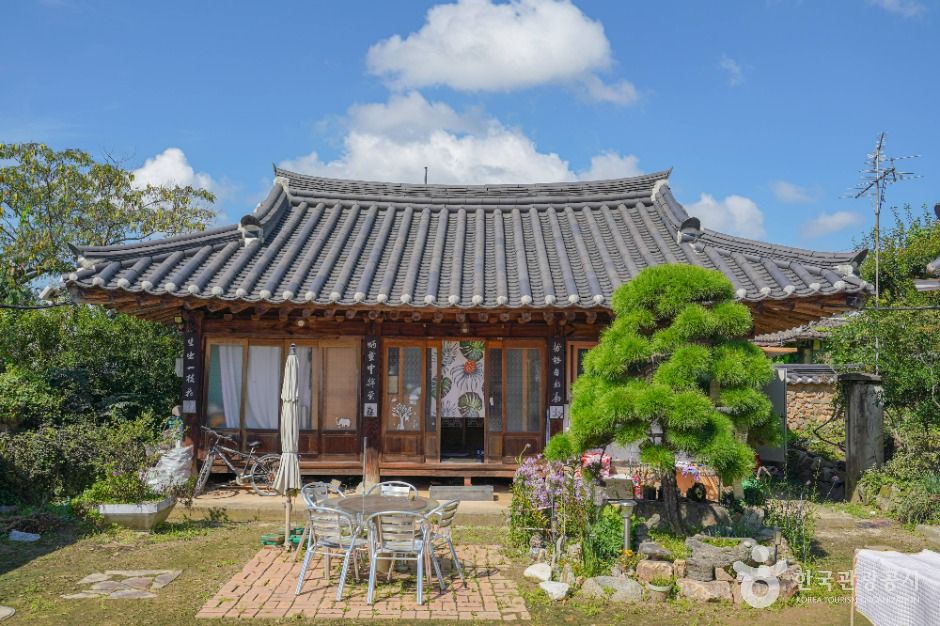
Gwon Hui-mun House
📍 9 Ome-gil, Sanseo-myeon, Jangsu-gun, Jeonbuk Special Self-Governing Province
🕐 Hours: Open all year round / Closed: None (open all year)
About this place
This is an old house from the late Joseon Dynasty located in Osan-ri, Sanseo-myeon. It was built by the tenth-generation ancestor of the current Suyu-ju, who settled in Osan-ri with his family to escape the political purges of King Gwanghaegun. According to the ridge beam inscription, the main house (Anchae) was built in 1866, and the guest house (Saranchae) in the 49th year of King Yeongjo's reign (1733). The guest house was renovated in 1875 and was moved from another location after the main house was built. Before the gatehouse was built in 1973, the west gate in front of the guest house's flower garden served as the main gate; however, a separate gatehouse was constructed because the gate was too narrow for carriages to pass through and the direction of the gate was deemed inauspicious. Generally, the guest house is the center of old houses, but in this house, the main house is the center. The structure is L-shaped rather than the straight-line structure typical of houses in the Jeolla region, and the fact that the pillars on the front of the main house are round while those of the guest house are square also indicates that the main house is the center of the residence. In addition to the main house and guest house, the west wing, lower wing, gatehouse, and outer wing are appropriately arranged. While the main house, guest house, and west wing remain largely in their original form, the remaining buildings have been significantly altered. The gatehouse was constructed as a storage facility using stacked blocks, and the outer wing is used as a cowshed, storage facility, and bathhouse. The lower wing houses livestock facilities, including a pigsty and cowshed, while a fodder storage room is located on one side of the guest house. Although much of the Kwon Hui-mun House has been changed and renovated, the main house and guest house have largely retained their original appearance, allowing one to examine the characteristics of an upper-class residence from the late Joseon Dynasty.
Source: Korea Tourism Organization
Based on public data and may differ from reality — please check before you visit.