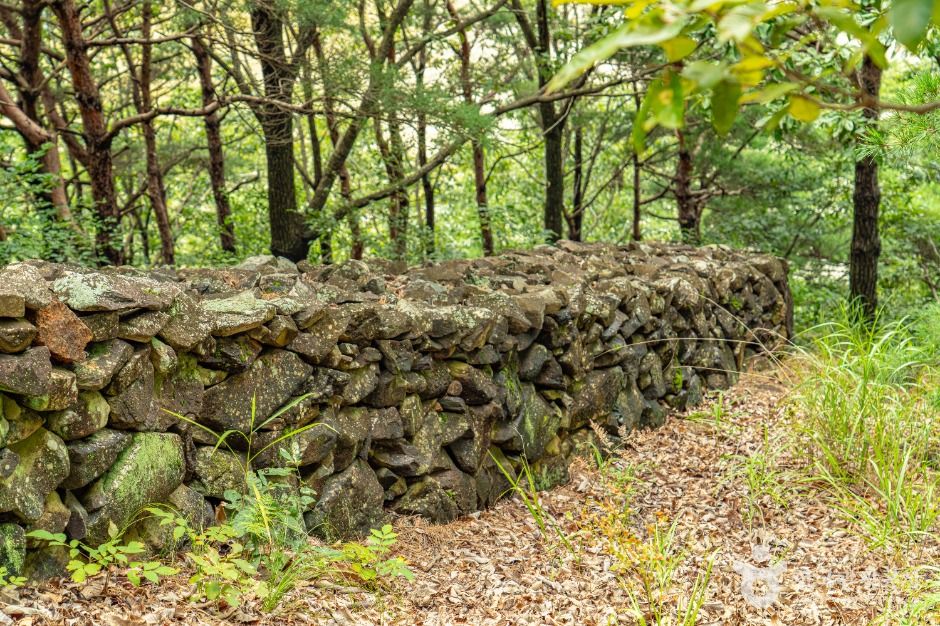
Gurye Seokjugwanseong
📍 4638-8, Seomjingang-daero, Toji-myeon, Gurye-gun, Jeonnam-Gwangju
🕐 Hours: 09:00~18:00
About this place
Located on a mountain range extending along the ridge from Nogodan to Wangsirubong, this Goryeo Dynasty fortress stretches from 20 meters below the southern peak of Chilbongsan Mountain to the rear of Chiluisa Temple. It served as the boundary between Mahan and Jinhan during the Samhan period, and as a strategic military stronghold between Baekje and Silla during the Three Kingdoms period. During the Goryeo Dynasty, the fortress was built to defend against Japanese pirates invading from the South Sea. As a strategic stronghold in Honam, defending this location would have allowed for the defense of Japanese invaders crossing from Jeonju toward Gurye and Namwon. Due to the rampant Japanese pirate activity during the late Goryeo period, a military garrison was established and operated; however, following the founding of the Joseon Dynasty and the stabilization of the political situation, the garrison was abolished, leaving the site in ruins. When the Imjin War broke out in the 25th year of King Seonjo's reign (1592), Gwak Yeong, the Defense Commander of Jeolla Province, built the fortress and assigned Yi Won-chun, the Magistrate of Gurye, to be in charge of defending Seokjugwan. After the Imjin War and the Jeongyu War, there was discussion within the royal court about establishing a Manhojin (military garrison) at Seokjugwan to prepare against Japanese pirates, just as had been done during the late Goryeo Dynasty; however, the site was never utilized, fell into disrepair, and remains in its current state. The total length of the fortress wall is approximately 750 meters, with a height of 50 to 120 centimeters, most of which has collapsed. It serves as an important resource for studying fortress construction techniques from the 13th and 16th centuries. From here, the Seomjin River Fish Ecology Center is located about 3 minutes by car (2.8 km) away, past Ganjeongyo Bridge to the left. Further along Seomjin River Boulevard for about 5.7 km, you can visit Unjoru Old House.
Source: Korea Tourism Organization
Based on public data and may differ from reality — please check before you visit.