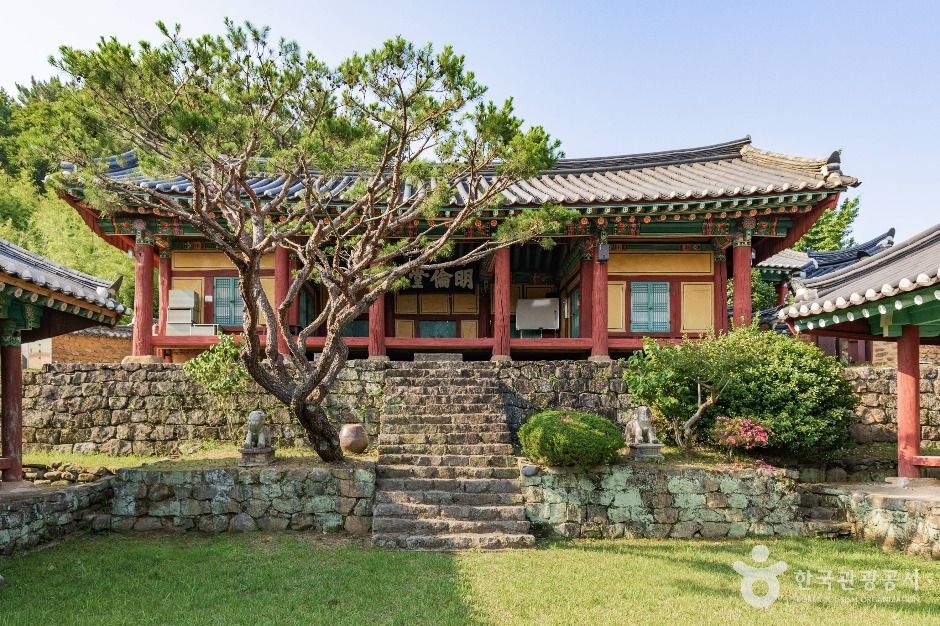
Gonyang Hyanggyo
📍 43-31 Hyanggyo-gil, Gonyang-myeon, Sacheon-si, Gyeongsangnam-do
🕐 Hours: 09:00~17:00 / Closed: Every weekend
About this place
Although the exact founding date of Gonyang Hyanggyo is not clearly recorded, considering that Gonyang-gun was elevated to the status of a county in the first year of King Sejong's reign (1419), it is presumed that the Hyanggyo was also established during the Sejong era. This can be easily inferred from the record in the section on Gonyang-gun in the *Sinjeung Dongguk Yeoji Seungnam*, published in the 25th year of King Jungjong's reign (1530), which states, "There are one county magistrate and one instructor." It is said that after Eo Deuk-gang assumed office as the magistrate of Gonyang, among his many achievements, he devoted himself particularly to local education, cultivating a large number of Confucian scholars. Subsequently, in the first year of King Myeongjong's reign (1546), Magistrate No Jin took office and established a site in Jeongdong to build the Confucian Shrine; therefore, it can be understood that this Hyanggyo is also a *Solseuwi* (small-scale) Hyanggyo (school in the front, shrine in the back) of the *Jeonhak-Humyo* (front-school, rear-shrine) layout. In the fourth year of King Hyeonjong (1663), Magistrate Park Yeong-gye moved the site to Beom-dong, and in the seventh year of King Sunjo (1807), Magistrate Shin O took office and moved it again to its current location, constructing nine buildings including Daeseongjeon, Daeseongmun, Myeongnyundang, Dongjae, Seojae, and Punghwaru. However, uniquely, there are no East or West wings to the left and right of Daeseongjeon, and Daeseongjeon is positioned diagonally to the right behind Myeongnyundang, resulting in a layout where the two areas are completely separated. It follows the "front-school, rear-shrine" arrangement, with Myeongnyundang (the place of study) and the East and West wings located in the front, and Daeseongjeon (the shrine) and Naesammun (the entrance gate) located in the back. Since then, it has undergone repeated renovations up to the present day, and practices such as the order of ancestral tablets and ancestral rites are identical to those of Sacheon Hyanggyo.
Source: Korea Tourism Organization
Based on public data and may differ from reality — please check before you visit.