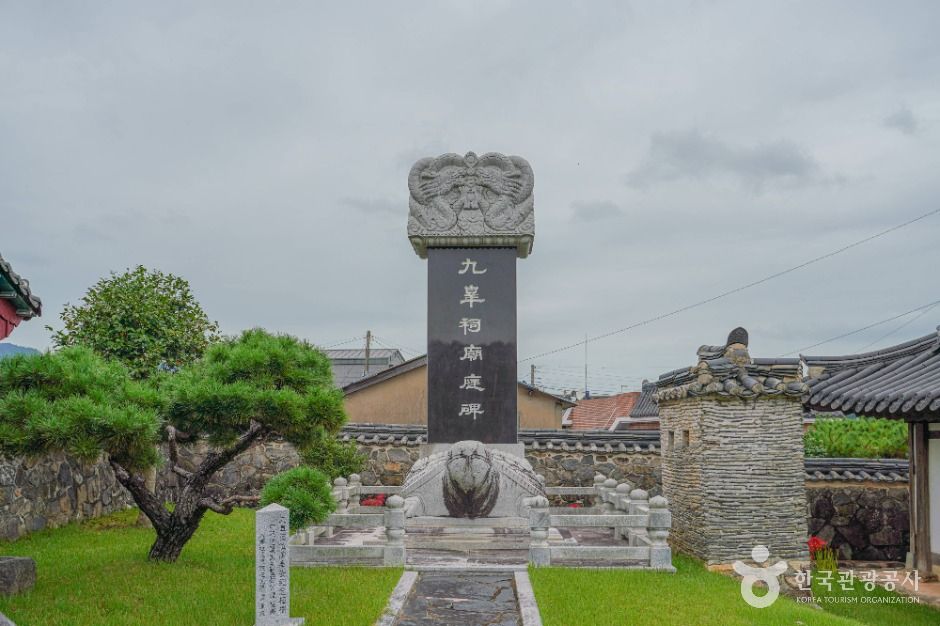
Gugosa and General Kim Wan's Ancestral Shrine
📍 20, Hwaso-gil, Seoho-myeon, Yeongam-gun, Jeonnam-Gwangju
🕐 Hours: Open at all times ※ As the facility is partially open, prior contact and consultation are required to view the interior of the shrine / Closed: None (open all year)
About this place
Kim Wan (1577–1635) was a military official from Yeongam during the late Joseon Dynasty who distinguished himself during the Jeongyu War and the Igal Rebellion. Gugosa is a shrine dedicated to commemorating General Kim Wan’s meritorious deeds, housing his spirit tablet, while Bujomyo enshrines a portrait of Kim Wan designated as a national treasure. Gugosa was first established in 1640 (the 18th year of King Injo’s reign) to honor General Kim Wan’s loyalty. Subsequently, the shrine came to enshrine Kim Jin-mun, a clan ancestor and Grand Scholar during the late Goryeo Dynasty, along with his nephews Kim Yeo-jun and Kim Yeo-ok. After burning down in 1889, it was rebuilt in 1946 at the initiative of local Confucian scholars and underwent repairs in 1979 and 1983. Regarding Bujomyo, it was customary for the state to permit the construction of a shrine and grant land and slaves to allow descendants to perform ancestral rites, while the spirit tablets of ancestors spanning more than four generations had to be removed from the shrine and buried. However, the spirit tablets of those who had rendered meritorious service to the country did not need to be moved with the king's permission. The ancestral shrine of General Kim Wan was established by royal decree after the general's death, and after being destroyed at one time, it was restored in 1979.
Source: Korea Tourism Organization
Based on public data and may differ from reality — please check before you visit.