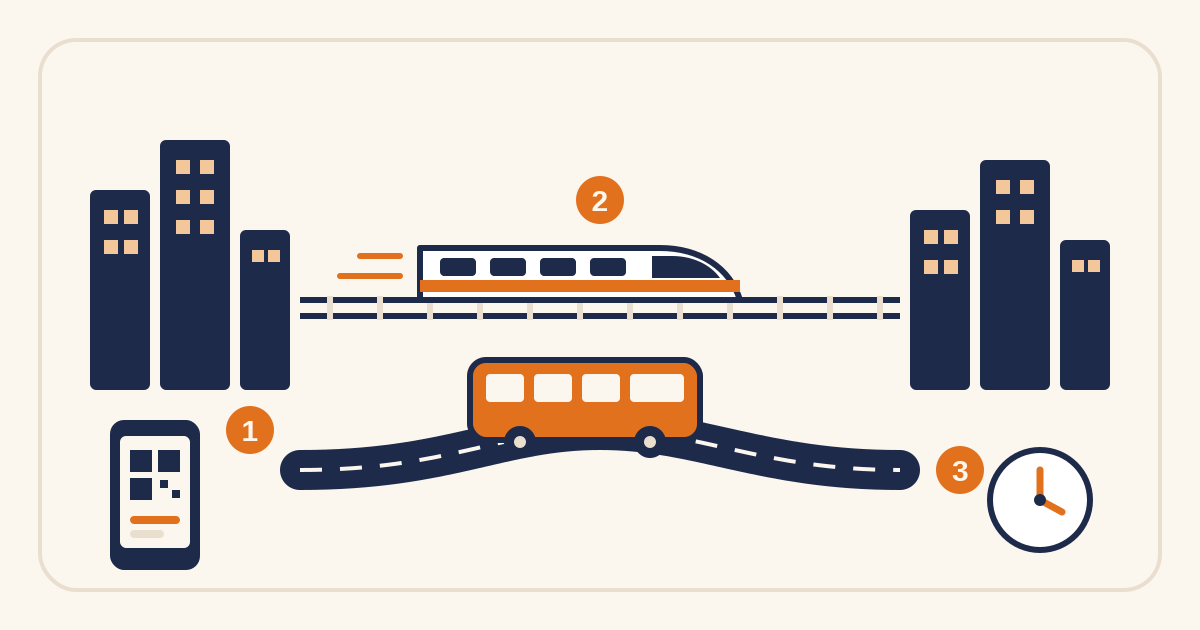
Trains vs buses — what is the difference?
High-speed trains are the fastest option. KTX is run by Korail and leaves from stations such as Seoul and Yongsan, while SRT is run by a different company (SR) and departs from Suseo Station in Gangnam, southern Seoul. Both cover the main lines towards Busan, Mokpo and elsewhere, but the departure stations and booking apps differ, so start by checking which station is closer to where you are staying.
ITX trains (Saemaeul, Maeum, Cheongchun) and Mugunghwa trains are slower but cheaper and stop at smaller stations. Express buses run straight between big cities on the highway, while intercity buses stop at towns along the way and reach places without a train station. Buses come in seat classes (premium, deluxe and standard) with different legroom and fares.
At weekends and over holidays, highway traffic can make bus journeys much longer, so if your arrival time matters, the train is the safer bet. On the other hand, some cities have their high-speed station far from the centre, so if you are staying downtown, the bus terminal may be closer. Compare total journey times, including getting to and from the station or terminal at both ends.
| Option | What it is like | Where to book |
|---|---|---|
| KTX | Fastest; leaves from Seoul, Yongsan and other stations | KorailTalk app, station counter, ticket machine |
| SRT | High-speed; leaves from Suseo Station | SRT app, T-money GO app, station counter |
| ITX and Mugunghwa | Slower but cheaper; stops at small stations | KorailTalk app, station counter |
| Express bus | Direct between big cities | Express bus T-money app, T-money GO app, terminal |
| Intercity bus | Stops along the way; reaches small towns | Bustago app, T-money GO app, terminal |
Booking train tickets
KTX, ITX and Mugunghwa tickets are booked on Korail’s KorailTalk app or the Korail website. KorailTalk has an English interface, and your ticket stays on your phone, so there is no need to print it. SRT tickets are booked in the SRT app or the T-money GO app.
If payment in the app does not go through (for example with a card issued abroad), use the station counter or a ticket machine instead. When all seats on the train you want are sold out, standing or non-reserved tickets are sometimes available, but you may have to stand for a long time, so trying another departure time is usually more comfortable.
Boarding without a ticket can mean paying an extra penalty fare on top of the normal fare. If you jumped on in a hurry, tell the crew straight away and buy a ticket.
Taking express and intercity buses
Express buses can be booked in the Express Bus T-money app or the T-money GO app, and intercity buses in the Bustago app or the T-money GO app. With a ticket bought in an app, you usually scan a QR code at the boarding bay.
Seoul has several bus terminals (Seoul Express Bus Terminal, Dong Seoul Terminal, Nambu Terminal and others), and buses to the same city may leave from different ones. Always check the terminal name and bay number on your ticket, and aim to arrive 10 to 15 minutes before departure.
Long-distance express buses may stop at a highway rest area. The driver will tell you when the bus leaves again, so snap a photo of the bus number and the time to avoid getting lost. Large luggage goes in the hold under the bus.
The rail pass for foreign visitors
Korail sells a rail pass (the Korail Pass) that only foreign visitors can buy. It lets you ride Korail trains, including KTX, multiple times within a set period, and your passport is used to confirm you are a foreigner. Foreigners living in Korea and some status holders may not be eligible.
The pass is for Korail trains, so services run by other companies, such as SRT, are usually not included. If you will only make a few trips, buying single tickets may work out cheaper, so do the maths with your itinerary before choosing. Check prices, validity and how to reserve seats on Korail’s foreign-language website.
Even with a pass, you often need to reserve a seat separately if you want to sit, and reserved seats on popular departures fill up quickly. Once your plans are fixed, book seats early, and carry both the pass and your passport on board — you may be asked to show both during ticket checks.
Avoiding busy times and refund rules
Friday evenings, Sunday afternoons and the Seollal and Chuseok holidays sell out fast. Holiday tickets go on sale in a separate booking window, so watch for the announcement. If you have a big suitcase, a seat near the luggage rack at the end of the carriage is easier.
Cancelling a train ticket well before departure costs little, and the fee grows the closer you get to departure time. After departure, you can often get only a partial refund, at a station and within a limited time, and higher fees have been applied during holiday periods. Bus tickets are also hard to refund once the bus has left. The exact fee is shown on the booking details screen in the app.
If a train is delayed or cancelled because of snow or an accident, you will be told through app notifications and station announcements. Depending on how late the train was, you may be entitled to compensation or a fee-free refund, so keep your ticket and ask at the station counter or the customer center.