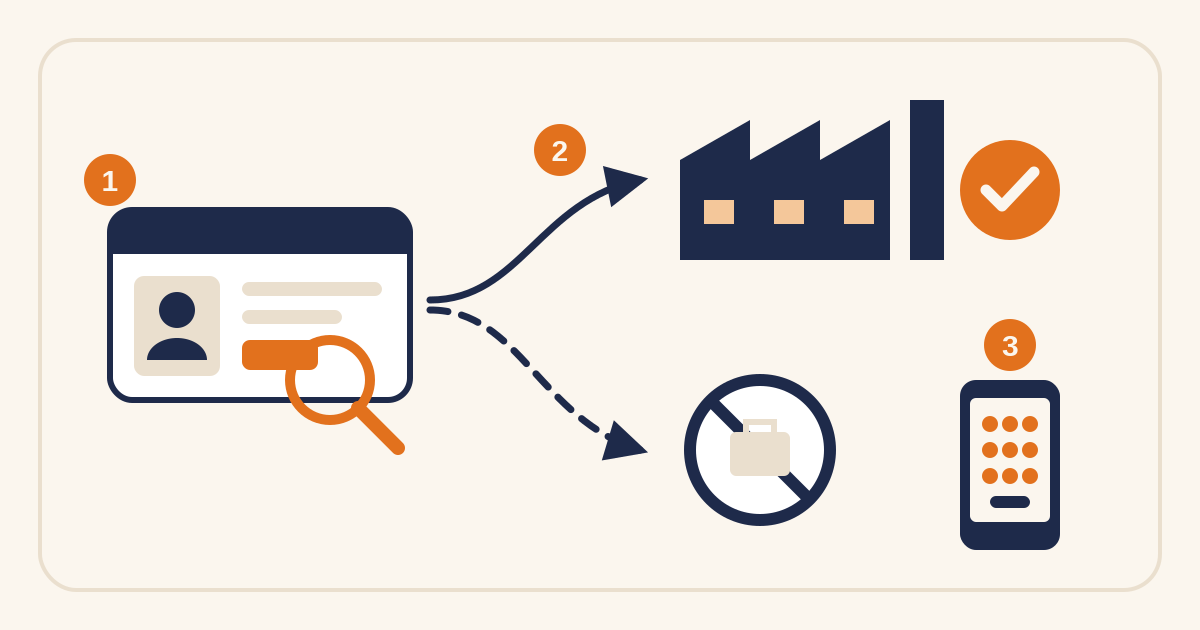
The basic rule: only within your status
Foreigners may only carry out activities that match their status of stay. To do work your status does not allow, you must first obtain “permission for activities outside your status” from an immigration office; working without it breaks the Immigration Act. Even unpaid activities can be a problem depending on their nature, so ask first if you are unsure.
Your status is shown as a letter-and-number code on your residence card (for example D-2, E-9 or F-6); check your expiry date at the same time. Even within one status, sub-categories can allow different things.
The big picture by status
The table below sums up only the broad principles for common statuses. Details change often, so always confirm the rules for your own status on HiKorea or by calling 1345 before you start any work.
In particular, if you entered as a tourist or visa-free, you are not allowed to work for pay. “Just come as a tourist and work” is the most common trap leading people into illegal employment.
| Status (examples) | Can you work? | What to check |
|---|---|---|
| Tourist, visa-free, short-term visit | No paid work | Beware of brokers who “guarantee a job” |
| Study (D-2), language training (D-4) | Only approved part-time work | Get permission first; keep to allowed hours and job types |
| Non-professional employment (E-9) | Only at the workplace covered by your permit | Changing workplace requires the job center procedure |
| Seasonal work (E-8) | Only at the designated farm or fishery | No work outside the set period and place |
| Overseas Korean (F-4) | Most work allowed | Some limits such as simple labour; rules recently changed |
| Marriage migrant (F-6), permanent resident (F-5) | Generally free to work | Check your period of stay and conditions for keeping the status |
Part-time work for students and language trainees
Students (D-2) and language trainees (D-4) must get part-time work permission before starting a job. Usually you have your documents checked by your school’s international office, then apply through HiKorea’s e-application service or at an immigration office. Language trainees may only be able to apply after a certain period following entry.
The hours you may work depend on your degree programme, year, Korean ability (such as TOPIK) and grades, and term-time and vacation rules differ. Permission is in principle tied to each workplace, so check again if you change jobs.
If you are caught working without permission, you can be barred from part-time work for a period, and repeat violations can seriously affect your stay. Guidance varies by school, so read your international office’s notices first.
Changing workplace on the Employment Permit System (E-9)
E-9 workers are, in principle, to work at the workplace covered by their employment permit; working somewhere else on your own counts as illegal employment. To move, you need a recognised reason such as the end of your employment contract, and you must apply to your local job center for a change of workplace.
There is a cap on how many times you can change, but moves for reasons that are not your fault, such as unpaid wages or assault, may not count towards it. If you do not apply within the set period after your contract ends, or cannot find a new job in time, you may have to leave Korea. The system has recently been under review, so confirm the current rules with your job center or the Ministry of Employment and Labor call center (1350).
If you simply walk out, the employer may report you as having left the workplace, and you can lose your status. However hard things are, do not decide alone — talk to the job center or a migrant worker support center first.
The risks of illegal work — and your rights
Working without permission can lead to fines, deportation and a ban on entering Korea for a period, and the employer can be punished too. Many people pay brokers large sums to come, only to end up in debt and caught in a crackdown.
That said, wages for work you have done and compensation for injuries at work can be protected by law regardless of your immigration status. If you have not been paid, contact the Ministry of Employment and Labor on 1350 (see our worker rights guide).
Where to check before taking a job
HiKorea (hikorea.go.kr) has guides for each status and e-applications such as permission for activities outside your status, and the Immigration Contact Center (1345) offers advice in several languages including Thai. For Employment Permit System procedures, you can ask the Ministry of Employment and Labor (1350) or the foreign employment service center (1577-0071).
When job hunting, use reliable listings such as the government employment service Employment 24 (work24.go.kr), and check that the visa requirements in the ad match your status. If an employer tells you not to worry about your visa, it is best to walk away from that job.