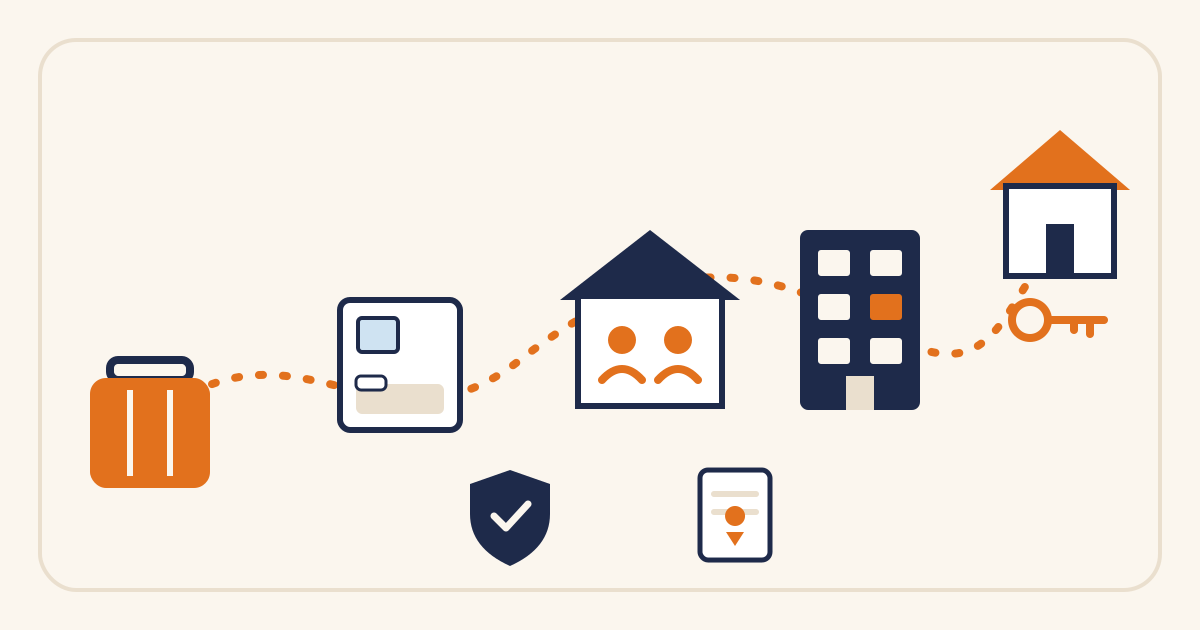
Why not sign a long lease straight away?
Ordinary Korean monthly-rent and jeonse leases usually run for one to two years and require a large deposit. If you rush into a contract without knowing the neighbourhood, your commute or the condition of the home, it is hard to move later and deposit problems can follow. That is why many people stay somewhere short-term for the first few weeks or months while they look around and choose a home in person.
However, long-term residents must prove the address where they actually live when they register as a foreigner or report a change of residence, so think about whether you can get paperwork for that address from the start. This is explained in more detail below.
Pros and cons of each option
A goshiwon (or goshitel) is a small room with a bed and desk, with a shared kitchen and laundry; you usually pay by the month, with little or no deposit. Guesthouses and hotels are charged by the night — convenient, but expensive for long stays. Share houses give you your own room with a shared living room and kitchen, often on contracts of a few months. Short-term officetel rentals give you a place of your own, but often come with a separate deposit and maintenance fee.
Prices vary a lot by area and season, so we do not list them here. Compare two or three places in the same neighbourhood, and always ask whether electricity, gas and internet are included in the rent.
| Type | Agreement and payment | Good points | Watch out for |
|---|---|---|---|
| Goshiwon / goshitel | Usually monthly, little or no deposit | Furnished, move in right away | Small and noisy rooms; check windows and fire safety |
| Guesthouse / hotel | Nightly, paid through booking sites | Easy from the very first night | Costly for long stays; proof-of-address papers may be hard to get |
| Share house | Contracts of a few months; often a deposit | Roomier kitchen and lounge; easy to make friends | Check house rules and refund terms if you leave early |
| Short-term officetel rental | One to several months; deposit and maintenance fee extra | Your own kitchen and bathroom | Make sure you are dealing with the real owner or an authorised person |
Safety checks before you move in
If possible, view the room in person; if not, ask for a video call showing the room and corridor. Check whether there is a window to the outside, where the emergency exit and stairs are, and whether there are fire extinguishers, sprinklers and fire alarms. If the corridor is cluttered and the exit is blocked, look elsewhere.
After deadly goshiwon fires, Seoul set standards requiring newly built or renovated goshiwon rooms to have a minimum size and a window, but places that were already operating may still have windowless rooms. A room with a window may cost more, but it is worth considering for escaping a fire and for ventilation. Also look at the door lock, how the building entrance is secured, and the street lighting at night.
Be careful when paying
Be wary of social media posts or messages asking you to send a “booking deposit” before you have seen the room. Send money only to an account in the name of the operator or owner shown on the contract or receipt, and keep a receipt or contract that states the amount paid, the period and the refund terms. For guesthouses and hotels, check booking-site details and reviews to make sure it is a properly registered lodging business.
Where you leave a deposit, such as an officetel, confirm that the other party is the real owner or someone authorised by them. If the deposit is large, do the same checks as for a regular lease — look at the property register and sign through a licensed real estate agent. See our housing lease guide for details. Also get in writing whether you can get money back for the remaining period if you leave early.
Your address and alien registration
When you register as a foreigner or report a change of residence, you submit a document showing that you actually live at that address. A lease in your own name is the standard; if you live in someone else’s home, an accommodation-provision confirmation is used, and many offices say that for places like goshiwon, a receipt for the rent you paid can serve instead. Hotels and guesthouses may not be able to give you such papers, so check on HiKorea or by calling 1345 which documents suit your visa and lodging before booking.
When you move from short-term lodging into a proper home, you must report your new address as a change of residence. The guidance is to do it within 15 days of moving, at your local community service centre, an immigration office or online on HiKorea. Update your address with your bank, phone carrier and delivery apps at the same time. K-lifeon’s lodging page can also help while you look for a new place.